

Published in indiacsr
Mohit Bansal’s journey—from academic excellence in the U.S. to building future cities in India—epitomizes the spirit of modern entrepreneurship rooted in national pride.
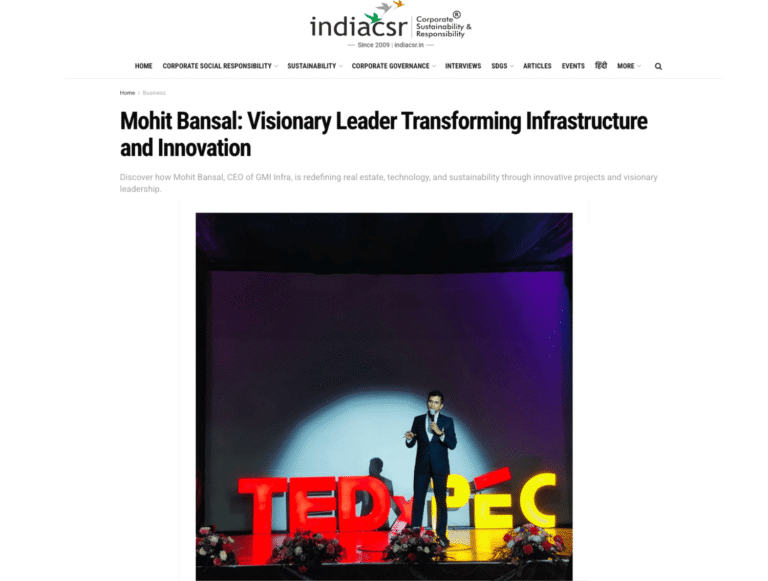
Mohit Bansal, the CEO of Grey Marble Infra Private Limited (GMI Infra), is not just a business leader—he is a visionary shaping the future of India’s cities and industries. A graduate in Computer Science and Applied Mathematics from the State University of New York, Mohit blends analytical intelligence with ground-level insight.
Instead of staying in the United States, he chose to return to India, driven by a deep conviction that true progress begins at home. His decision to build from Chandigarh, a planned city rich in architectural legacy, marked the beginning of a transformative journey.
Today, Mohit Bansal stands as a real estate innovator, technology entrepreneur, and philanthropist whose work integrates growth, sustainability, and human progress.
Follow Mohit Bansal on X — @MohitBansalgmi
The Road Ahead Vision 2030
By 2030, GMI Infra aims to establish 10 IT parks across North and East India, each acting as a magnet for investment, innovation, and inclusive growth. The company envisions contributing to India’s economic transformation, urbanization goals, and digital empowerment—brick by brick, city by city.
GMI Infra: Building the Future of India
Founded in 2018, GMI Infra emerged not from a business idea but from a conviction that real growth begins with infrastructure. For Mohit Bansal, infrastructure is more than cement and steel—it is nation-building in motion.
Vision and Philosophy
Under Mohit Bansal’s leadership, GMI Infra develops ecosystem-based urban zones where commercial, residential, and innovation-driven institutions coexist. The company’s philosophy emphasizes nation-first thinking, holistic urban planning, and community partnerships. By focusing on Tier-2 cities, often overlooked by mainstream developers, GMI Infra is creating new growth hubs that empower local economies.
As Mohit Bansal says, “We don’t just build infrastructure; we build ecosystems that enhance lives, empower businesses, and respect the environment.” His story is not merely about constructing buildings—it is about constructing a better India.
